Saturday, March 16, 2019

The Musical Birthday Series - March 16 - David del Tredici

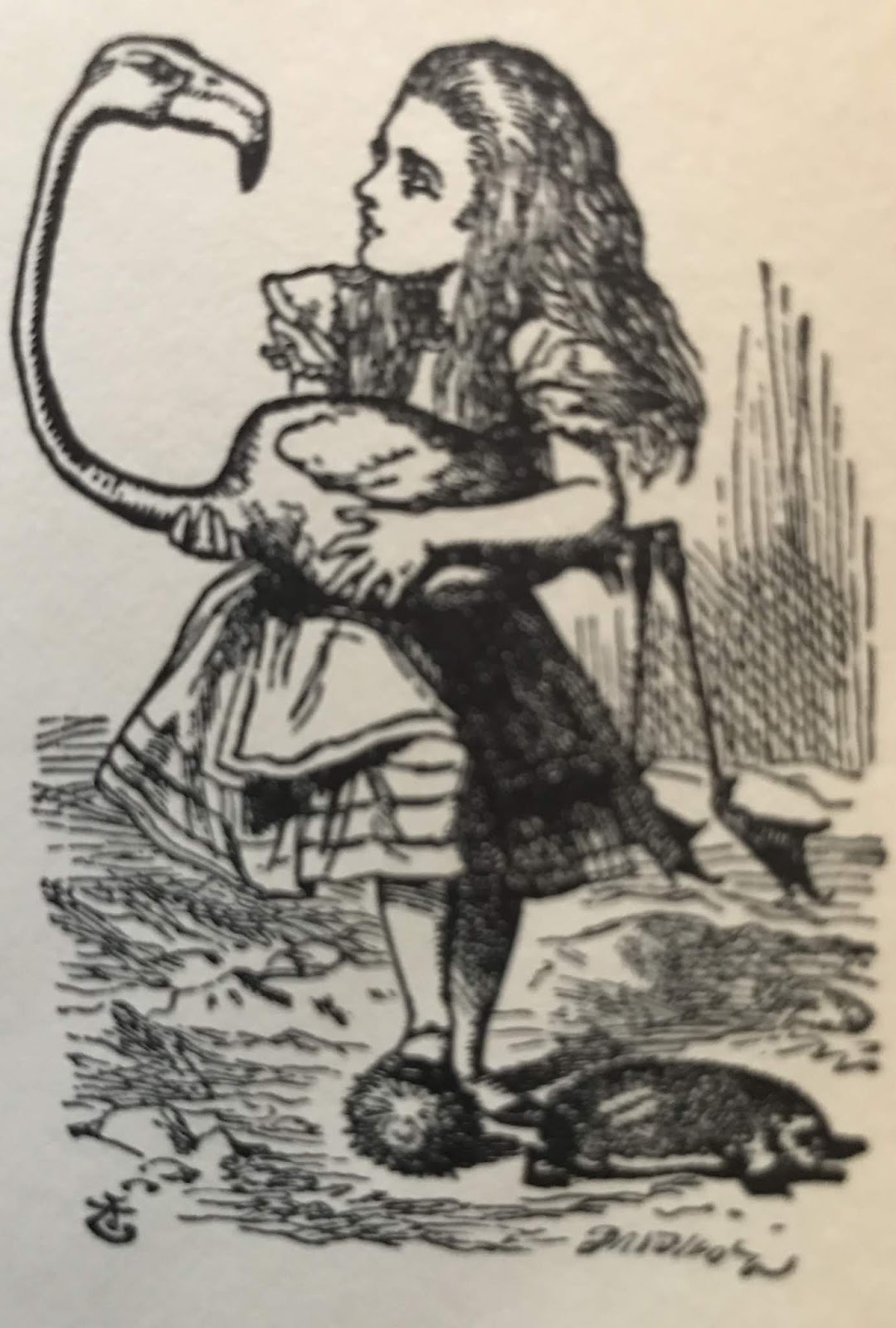
Today we celebrate David Del Tredici (born March 16, 1937) with a double dactyl.

A double dactyl is a biographically inspired humorous poem with very strict structural rules.  Here are links to two definitions for those who are curious.  The first from the Poetry Foundation is clearer but less accurate than the second, from Wikipedia.  Take your pick.  The classic statement is the book Jiggery-Pokery:  A Compendium of Double Dactyls by Anthony Hecht and John Hollander (New York, 1967).


Dactyls in Wonderland

Snicker-snack, snicker-snack
David Del Tredici,
Losing his taste for the
Serial style,

Started composing more
Neo-Romantically,
As he obsessed about
Alice awhile.


Friday, March 15, 2019

The Musical Birthday Series - March 15 - Colin McPhee

Colin McPhee (March 15, 1900  – January 7, 1964) did important pioneering ethnomusicological work on Balinese music.  His best-known compositions are strongly influenced by these studies.

Cultural Exchange
Consider the case of Colin McPhee
Whose ethnomusicology
Led to composing with colors and forms
Based on Asian island norms.
This kind of thing is no longer PC
(To borrow a gamelan’s timbre, e.g.),
But back in the day the appeal of exotic
Colors, and rhythms, and forms was hypnotic.
McPhee showed the music of Bali to Britten,
Who liked what he heard, in a word, he was smitten,
And thus Curlew River came to be written

Thursday, March 14, 2019

The Musical Birthday Series - March 14 - Georg Philipp Telemann

Georg Philipp Telemann (March 14, 1681-June 25, 1767) was one of the most prolific composers of all time, so it is appropriate to celebrate with not one, but two, offerings.

The first poem is a double dactyl, a genre of biographically inspired humorous poem with very strict structural rules.  Here are links to two definitions for those who are curious.  The first from the Poetry Foundation is clearer but less accurate than the second, from Wikipedia.  Take your pick.  The classic statement is the book Jiggery-Pokery:  A Compendium of Double Dactyls by Anthony Hecht and John Hollander (New York, 1967)


(Image: Grove Music Online)

To Thine Own Self Be True: A Double Dactyl for GPT
Higgledy piggledy,
Georg Philipp Telemann
Cranked out cantatas, a
Thousand or more.

Sometimes composing so
Self-referentially,
Things that he wrote he had
Written before.

 ♪♫♫♫ ♪♫♫♫ ♪♫♫♫ ♪♫♫♫ ♪♫♫♫ 

Radio Head
Georg Philipp Telemann, let it be said,
Wrote rather much that he shouldn’t have written.
When a new motive popped into his head
He wrote a whole opus that he could fit it in.

Call him prolific, or call him a hack,
Travel to any of many locations,
It’s likely you’ll hear his polite bric a brac
On nonprofit classical radio stations.

Tuesday, March 12, 2019

The Musical Birthday Series - March 13 - Hugo Wolf

Today we wish Hugo Wolf (13 March 1860 – 22 February 1903) a happy birthday with a long tribute reminiscent of an eighteenth-century satire in heroic couplets. Such couplets have a tendency to proliferate like rabbits, and that is exactly what has happened here.


Chased by a Wolf Pack

The Liederabend like a sacred service
Will make the uninitiated nervous.
A ritual performance not confined
To those on stage, but is in fact designed
So everyone can play a role assigned.

To hear the true performance you should listen
To patrons holding forth at intermission.
Each cognoscente loudly has their say
On Schwarzkopf, Fischer-Dieskau or Souzay.
“Of course there’s not much voice left, but her style!”
“But don’t you think her high notes are a trial?”
“Miss Price has sung it better by a mile”
“But have you heard it sung by Hermann Prey”
“You like it sung by Bostridge?! Good Lord, why!”
“There’s really not a thing that’s as rewarding
As Ludwig’s Salzburg Festspiel live recording”

Nor does the talk turn only on the voice;
Each speaker has composers of their choice.
While Schubert, Brahms, and Schumann have adherents,
There’s ecstasy when Wolf makes his appearance —
Most esoteric of the Lieder throng —
Archbishop at the altar of the song.

The songs of Hugo Wolf consist of sets
Of perfectly interpreted vignettes
Arranged into a small anthology
Of extra subtle musical psychology.
Each poet chosen for what could be brought
By sung elaboration to the thought.
There’s Goethe, Michelangelo, what’s more,
There’s Möricke and Eichendorff (top drawer!).
Italian songs whose folk-inspired source
Provided texts both serious and coarse.
And Spanish songs as solemn as a sermon,
Perhaps because, though Spanish, sung in German.
Not Lieder for the casually inclined,
They call for an attention so refined
They leave th’untutored hoi polloi behind.

So heed this warning note when you see Hugo
Wolf is programmed any place that you go.
Monday, March 11, 2019

The Musical Birthday Series - March 12 - Thomas Augustine Arne

In honor of Thomas Augustine Arne's (12 March 1710– 5 March 1778) birthday, here is the first verse of "Rule, Britannia!" re-written as a limerick.


Britannia Redux

When Britain at Heaven’s command
Arose from the watery strand,
Britannia vowed
To never be bowed,
Or cumbered in slavery’s band.


(original text from The Poetical Works of James Thomson [Boston, 1854], from my collection)

The Musical Birthday Series - March 11 - Carl Ruggles

The complete works of American composer Carl Ruggles (March 11, 1876 – October 24, 1971) were recorded on only two LPS, so it seemed appropriate that his birthday verse be terse.


Short… (and Sweet?)

Nobody snuggles
To music by Ruggles.

Sunday, March 10, 2019

The Musical Birthday Series - March 10 - John Bacchus Dykes

John Bacchus Dykes (10 March 1823 – 22 January 1876) was the composer of such beloved hymn tunes as "Holy, Holy, Holy," "Jesus, the Very Thought of Thee," and "Eternal Father, Strong to Save," so I thought that today we should sing about him.